
How to Test Your Sump Pump Before Winter
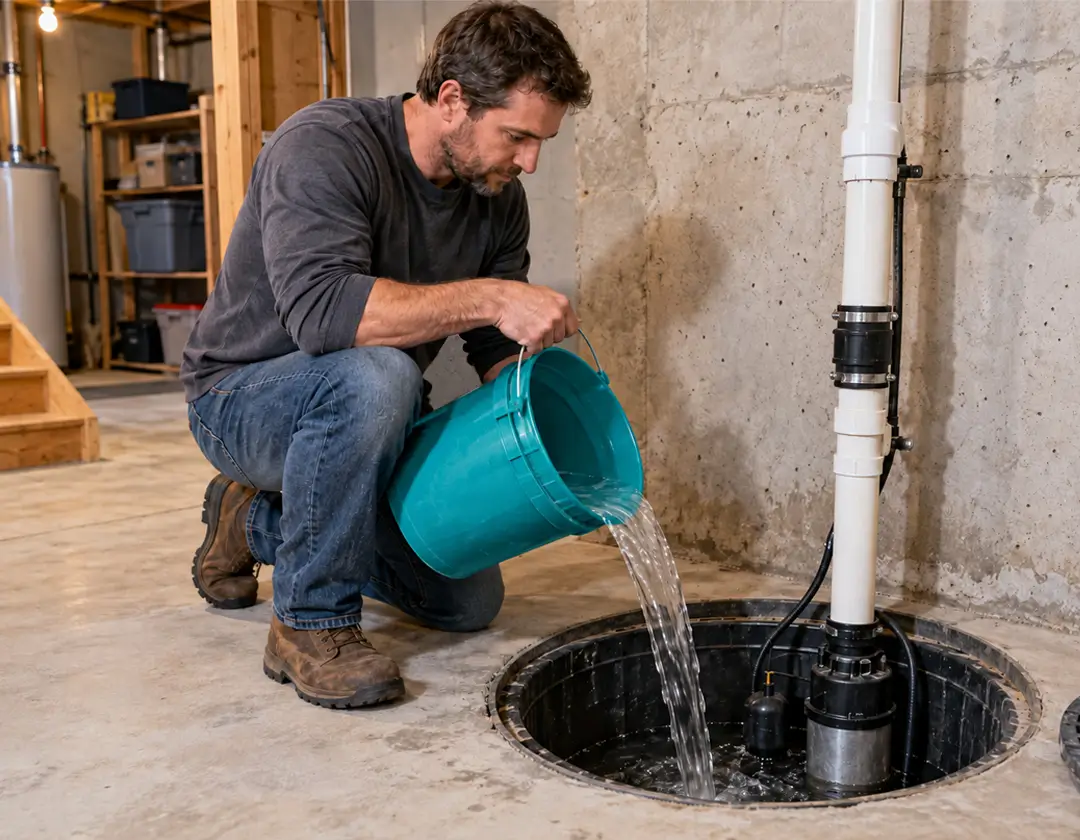
Quick answer: To test a sump pump, pour water into the sump pit until the float rises and triggers the pump to turn on. The pump should engage, drain the water quickly, and shut off automatically once the water level drops. If the pump doesn't start, runs continuously, doesn't drain the pit fully, or makes unusual noises, it likely needs service before wet weather arrives. The whole test takes about ten minutes.
Fall rain and winter snowmelt put the most demand on a sump pump, and they're also when a failed pump does the most damage. Testing yours before the weather hits is a 10-minute job that can save you from a flooded basement, ruined finished space, and a repair bill that lands well into the thousands.
Why Test Your Sump Pump Before Fall
Sump pumps sit dormant during dry months. When water hasn't reached the float in weeks or months, small problems can develop unnoticed. The float switch gets stuck. The impeller freezes with debris. The check valve fails. The motor bearings dry out.
You won't know about any of these until water starts rising in the pit during heavy rain, which is the worst possible time to find out.
An annual fall test gives you time to fix small issues before you need the pump running. A simple test can catch some sump pump problems before you actually need the pump to run.
Here's how to test yours the right way.
What You'll Need
- A five-gallon bucket
- A garden hose or another source of water
- A flashlight
- Rubber gloves (recommended)
- Your circuit breaker location, in case you need to shut off power
Step-by-Step: How to Test Your Sump Pump
1. Locate and Inspect the Pit
Your sump pump sits in a pit, usually in the basement or crawlspace, often in a corner or along an exterior wall. Remove the lid or cover.
Look inside. The pit should be reasonably clean. Check for debris, silt buildup, or anything that could block the pump inlet or interfere with the float switch. Clean it out if needed.
2. Verify Power Is Connected
Confirm the pump is plugged in. Some homes have the pump on a switched outlet, so make sure the switch is on. If the pump has a battery backup, check that its indicator light shows the battery is charged and in good condition.
3. Pour Water Into the Pit
Slowly pour water into the pit until the float rises. Depending on your pump's design, this may take one bucket or several.
As the float rises, the pump should engage. You'll hear the motor start, and water should begin draining out through the discharge pipe.
4. Watch the Pump Run
Observe as the pump drains the pit. It should:
- Start promptly when the float lifts
- Drain the water quickly and steadily
- Shut off automatically once the water level drops below the float
- Run without unusual grinding, rattling, or high-pitched noises
5. Check the Discharge Line
Step outside and confirm water is coming out of the discharge line where it exits the house. If water isn't coming out, or is only trickling, the discharge line may be clogged, frozen, or disconnected somewhere along its run.
6. Test the Check Valve
The check valve is a one-way valve on the discharge pipe. It stops drained water from flowing back into the pit when the pump shuts off. After the pump stops, listen for water running back into the pit. A small amount is normal. A steady flow suggests a failed check valve.
Common Problems and What They Mean
The pump doesn't turn on. Check the power connection first. Then check whether the float is stuck. Reach in with a gloved hand and gently lift the float. If the pump runs when you lift it manually, the problem is with the float switch.
The pump runs but doesn't drain water. The impeller may be clogged, the discharge line may be blocked, or the check valve may be stuck closed.
The pump runs continuously. The float may be stuck in the up position, or the check valve may have failed and be letting drained water flow back in.
The pump cycles on and off rapidly. The float switch may be set incorrectly, the pit may be too small for the pump's flow rate, or there may be a plumbing issue in the discharge line.
Unusual noise. Grinding usually means debris in the impeller. Rattling can be a loose mounting or worn bearings. A humming sound with no water movement often points to a failed impeller.
Should You Have a Battery Backup?
Sump pumps run on electricity. If your home loses power during the exact storm that fills the pit, your primary pump can't help.
A battery backup sump pump takes over automatically when the power goes out. Costs range from around $200 for a basic model to $1,000 or more for a larger, longer-running system. If your basement is finished, or if your area often loses power during storms, the backup is worth serious consideration.
Water-powered backups are another option in homes with municipal water pressure high enough to drive them. They don't run out of battery but do consume city water while running.
When to Call a Pro
Most sump pump testing is a straightforward DIY task. A few situations call for professional help:
- The pump doesn't respond to the float even when lifted manually
- Water is bypassing the discharge line and reappearing in the pit
- The pump is more than 10 years old and showing multiple issues
- You've never seen the pump run and aren't sure what's normal
- The pit smells strongly of sewage (this may not actually be a sump pit but a sewage ejector pit)
Pump replacement typically runs $400 to $1,200 installed, depending on the model and complexity. Sooner is cheaper than after a flood.
How APHW Fits
APHW's standard plan covers permanently installed sump pumps for groundwater. If a covered sump pump breaks down from normal use, your APHW plan can help protect your budget from an unexpected repair expense.
If you want to know exactly what's covered on your specific plan, your Confirmation Page has the details, or you can call APHW to walk through it.
Ready to Get Covered?
If you have a sump pump and want to know how coverage would apply to your home, we're happy to walk you through it.
Call 800.648.5006, visit aphw.com, or reach out to your APHW Area Sales Manager.
