
Dryer Not Heating? Common Causes and What to Check
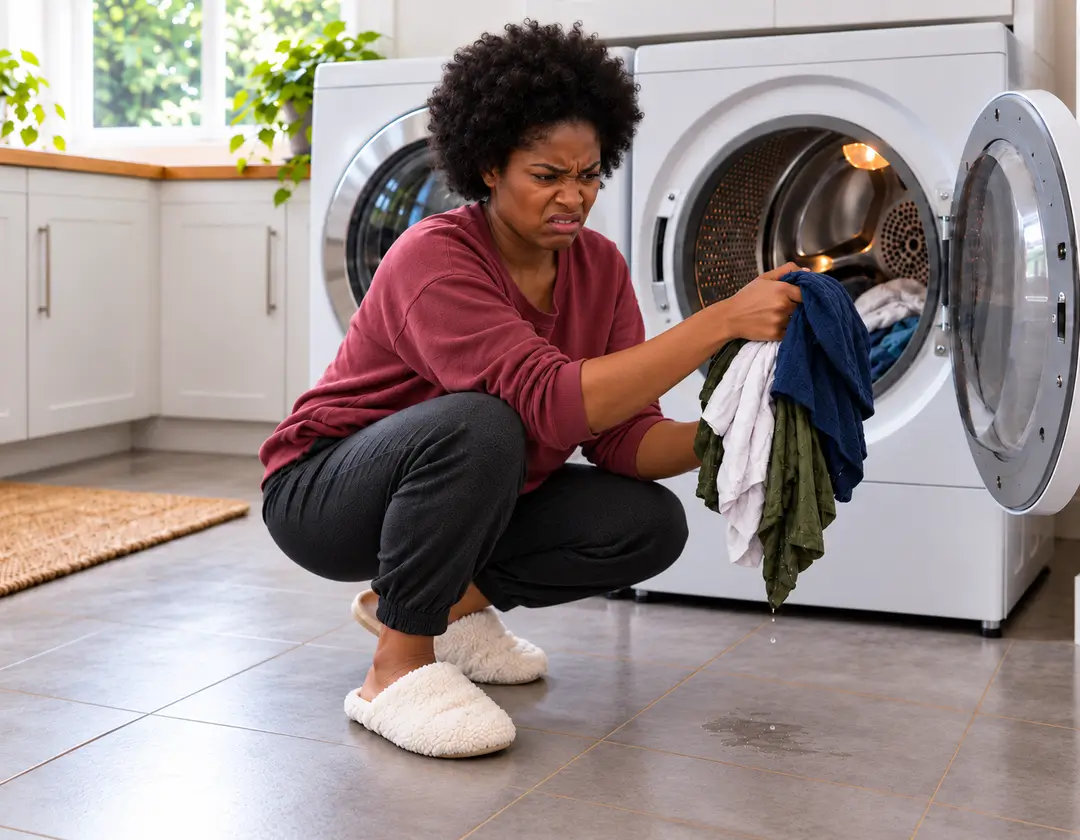
Quick answer: The most common reasons a dryer isn't heating are a clogged lint filter or vent, a tripped circuit breaker or gas supply issue, a burned-out heating element in electric dryers, a bad igniter in gas dryers, or a failed thermal fuse. Simple checks like cleaning the lint filter, resetting the breaker, and confirming gas supply can be done at home. Internal component replacement usually requires a licensed appliance repair technician.
A dryer that runs a full cycle without heating leaves you with a wet pile of laundry and a stack of possible causes. Some are simple fixes you can handle in five minutes. Others need a technician. Here's how to narrow it down and what to do next.
Safety First: Gas vs. Electric
Before you start troubleshooting, know which type of dryer you have. Electric dryers use a 240-volt outlet and a heating element. Gas dryers connect to a natural gas or propane line and use a burner assembly.
The safety rules are different for each. Electric dryers involve high-voltage circuits that can cause serious injury. Gas dryers involve fuel lines and combustion. In both cases, unplug the dryer from the wall, and shut off the gas supply for gas models, before opening any panel or attempting any internal check.
If you're not comfortable with either, skip to the "When to Call a Professional" section.
Easy Things to Check Yourself
These are the first four checks to make before assuming a bigger problem.
1. Clean the Lint Filter and Vent
A blocked lint filter or vent restricts airflow, which triggers the safety mechanisms in the dryer to reduce or shut off heat. This is a common cause of a dryer that "won't heat."
Remove and clean the lint filter after every load. Once every few months, disconnect the vent duct from the back of the dryer and clean the entire vent line all the way to the exterior wall termination. Lint accumulates far past the filter.
A clean vent isn't just about performance. Clogged dryer vents are a leading cause of home fires.
2. Check the Circuit Breaker
Electric dryers use two circuit breakers in a 240-volt configuration. If one breaker trips but the other stays on, the dryer's motor and drum may still run, but the heating element won't get power. To the user, the dryer looks like it's working normally but never gets hot.
Find your electrical panel, locate the double breaker labeled for the dryer, and reset it by flipping it fully off and then back on.
3. Confirm Gas Supply (Gas Dryers Only)
If you have a gas dryer, check that the gas supply valve behind the unit is fully open. Also check that other gas appliances in the home are working. If the range and water heater are also off, the issue may be with your gas service rather than the dryer.
4. Verify the Cycle Setting
This one sounds obvious, but it happens. Some dryer cycles, like "Air Fluff" or "Air Dry," intentionally run without heat. If you or someone else in the house recently used the dryer, check that the cycle selector isn't stuck on a no-heat setting.
Common Part Failures Behind No Heat
If the easy checks don't solve it, the problem is likely one of these internal components. Each of these calls for a technician.
Blown Thermal Fuse
A thermal fuse is a safety component that permanently blows if the dryer overheats. Once it blows, the dryer may keep running but won't produce heat. Thermal fuses are a common failure, and they're usually a quick fix for a technician, though the underlying cause (often poor venting) still needs to be corrected.
Failed Heating Element (Electric Dryers)
The heating element is a coiled wire that heats the air passing over it. Elements burn out over time. When one fails, the dryer runs normally but produces cold or lukewarm air. A technician can test the element with a multimeter and replace it in a single visit.
Failed Igniter (Gas Dryers)
The igniter lights the gas when the dryer calls for heat. A failed igniter is one possible cause when a gas dryer runs but isn't producing heat.
Bad Gas Valve Solenoid Coil (Gas Dryers)
The solenoid coil controls gas flow to the burner. If it fails, the igniter may glow, but the gas never releases, so no flame develops. A technician tests these and replaces them as a set.
Faulty High-Limit or Cycling Thermostat
Dryers have multiple thermostats that regulate heat and cut it off if the dryer gets too hot. When one fails in the "open" position, the dryer stops producing heat entirely. Thermostats are inexpensive parts, and replacement is a standard technician job.
Control Board or Timer Failure
On newer dryers, an electronic control board tells the heating system when to turn on. On older units, a mechanical timer does the same job. Either one can fail, and either failure can prevent heat from cycling on even if all the other components are working.
When to Call a Professional
If the easy checks didn't solve the problem, or if you're dealing with a gas dryer, this is where a licensed appliance repair technician takes over. A pro can diagnose the specific failure, source the right part, and complete the repair usually in one visit.
Typical costs for a dryer repair range from $150 to $400 depending on the part involved and local labor rates. That compares favorably to replacement, which runs $500 to $1,500 or more depending on the type and features.
If your dryer is older than 10 years and facing a significant repair, weigh the cost of the fix against a new unit. If the machine has needed several repairs recently, replacement is often the smarter call.
How APHW Fits
APHW's standard plan covers washers and dryers, including components like the heating element, thermal fuse, thermostats, igniter, gas valve, motor, and control board. Certain items are specifically not covered: soap dispensers, filter screens, plastic mini-tub, dials and knobs, lint screen, venting, and damage to clothing.
When a covered failure hits, you choose the licensed appliance technician you trust to make the repair. That gives you the flexibility to choose a licensed appliance technician you trust, while your APHW plan can help protect your budget when a covered breakdown happens
Ready to Talk Coverage?
If you have questions about washer and dryer coverage or want to see how it applies to your specific model, we're happy to walk you through it.
Call 800.648.5006, visit aphw.com, or reach out to your APHW Area Sales Manager.
