
Tankless Water Heater Maintenance Made Simple: Keep Your Hot Water Flowing
How many times a week do you use hot water?
Probably every day—whether it’s for showers, dishes, or laundry. Your water heater is essential, and if you have a tankless system, the good news is: maintenance is easier than you might think.
Let’s walk through how your system works, how to care for it, and how to extend its life—while saving on energy and repair costs.
What Is a Tankless Water Heater?
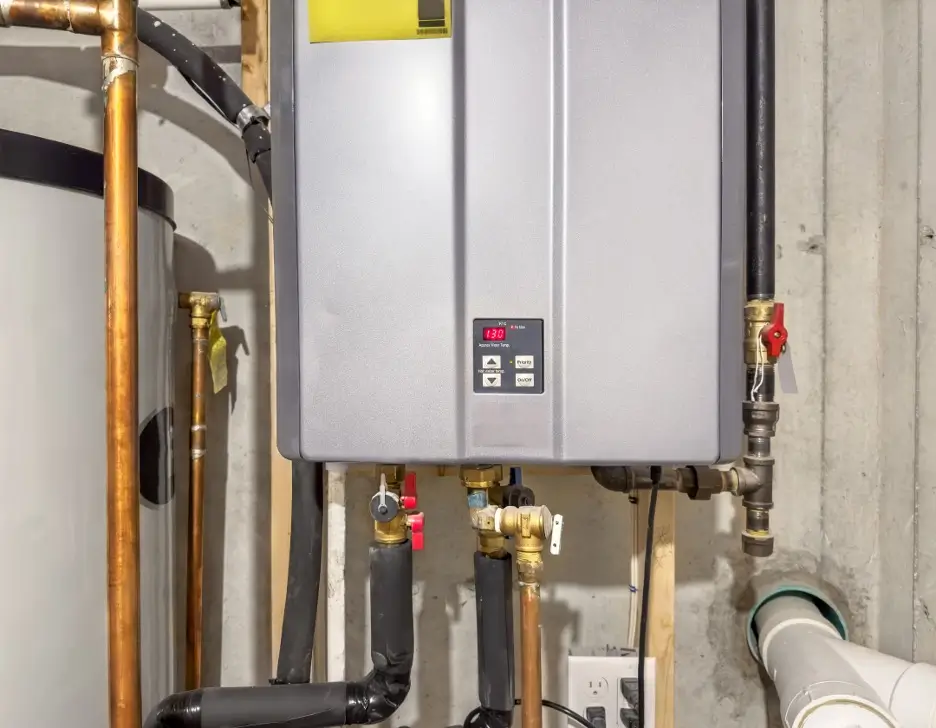
Unlike traditional models that keep a large tank of hot water constantly ready, a tankless water heater heats water on demand—giving you hot water whenever you need it.
Benefits of tankless systems:
- Compact design that saves space
- Reduced energy usage
- Minimal maintenance
- An average lifespan of 20 years—twice that of standard tank heaters
Gas vs. Electric Tankless Water Heaters
Both types use electricity, but gas-powered units also use natural gas to heat water quickly.
How to tell the difference:
- Gas units often have a visible pilot light or exhaust vent
- Electric units typically connect with a heavy-duty cord and don’t have vents
Pro tip: Set your water heater to 120°F–135°F to reduce energy waste and prevent scalding or bacteria.
How Often Should You Clean It?
At least once a year, or sooner if you notice:
- Rusty or cloudy water
- Low water pressure
- Fluctuating water temperatures
- Loud noises or banging
- Water pooling underneath the unit
Maintenance Tools You’ll Need
Before you begin, gather these essentials:
- 2 flush hoses
- 1 submersible pump
- 4 gallons of white vinegar or a descaler
- Plain water
- 1 five-gallon bucket
- Recirculation pump
Pro tip: Many hardware stores sell ready-made flush kits to make this easier.
How to Clean Your Tankless Water Heater
Step-by-step:
- Shut off power to the unit. If it’s gas-powered, also turn off the gas valve.
- Close the water supply valves. Blue for cold in, red for hot out.
- Attach hoses to the purge ports and remove their caps.
- Run vinegar through the heater using the recirculation pump to clear mineral deposits.
- Flush the system again using plain water.
Clean the Filters & Exterior
- Water filter: Rinse sediment trap with soapy water and wipe with a microfiber cloth.
- Air filter: Clean the same way, but make sure it’s completely dry before reinstalling.
- Exterior: Use a damp cloth to gently wipe down the outside—avoid electrical components.
Notice anything off? Rust, cracks, or leaks are signs to call a pro.
Final Steps
- Remove hoses and close purge ports.
- Reopen cold water valve to flush remaining vinegar.
- Reconnect electricity (and gas, if needed).
- Reopen all valves and confirm the system is running normally.
You’re done—and you just gave your unit the love it needs to last longer, work smarter, and keep your showers hot.
Still unsure? Or want to protect yourself from unexpected repairs?
Click HERE to get your free quote today!
