
How to Aerate Your Lawn—and Why You Should
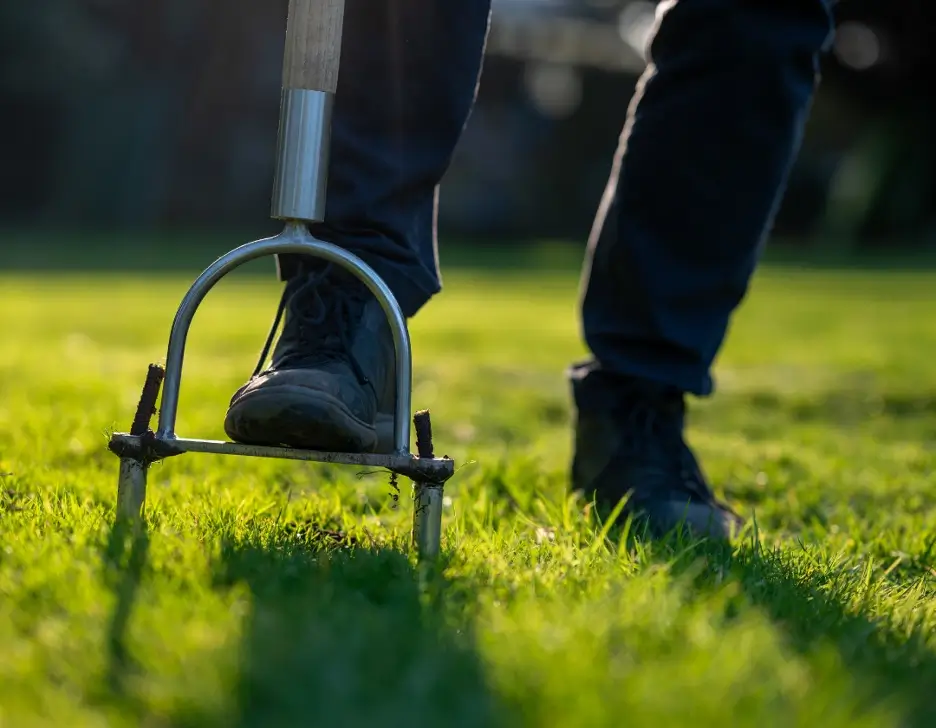
Do you wish you could take pride in your lawn?
If lush green grass feels out of reach (despite constant seeding, fertilizing, or even a water sprinkler system), learning how to aerate your lawn may be the answer to your prayers.
Why should you aerate your lawn?
Over time, all the people, animals, lawnmowers, and other things that cross your yard compact the top layer of dirt and dead grass. This creates a layer of thatch between the green grass and the roots below. The more compact the thatch gets, the less air, water, and nutrients can reach the roots—preventing healthy growth.
Aerating your lawn punches holes through this compacted layer, allowing the roots to get what they need. It also helps any seed or fertilizer get where it’s really needed.
When should you aerate your lawn?
The best time to aerate your lawn is in early fall, a day or two after a thorough watering (whether by rain or your sprinkler system). Avoid aerating during the heat of summer, as it could further damage grass already stressed from high temperatures.
If it’s been over a year—or forever—since your lawn was last aerated, it may be time. Watch for these signs:
- Difficulty growing grass
- Brown, thin, or patchy areas
- High foot traffic
- Sod-based lawn that’s never been aerated
- Hard soil or puddling where water used to soak in
You can also try the “screwdriver test”: Push a regular screwdriver into your lawn’s soil by hand. If it goes in easily, no need to aerate. If it resists, aeration may help.
How to aerate your lawn
A little prep goes a long way—start off right to save money down the road.
Flag the field
Aerators are heavy and use spikes or blades to dig into the soil. To avoid damaging anything, flag decorations, sprinkler heads or valves, and other immovable objects in your yard.
Choose your tool
Most lawn and garden stores or rental companies offer aerators for half-day rentals. Here are your options:
- Hollow coring tine aerators: These remove cores of soil, creating holes throughout the yard. They’re the most effective tools, as they allow air, water, and nutrients to reach the roots. You can leave the cores behind to break down and fertilize the lawn naturally—just know mowing over them may dull your blades.
- Spike aerators: These punch holes into the soil without leaving cores. While some prefer the cleaner result, spikes can compact soil from the sides. They help, but not as effectively as hollow tines.
- Slicing aerators: These use rotating blades to slice thin paths into the soil. They’re like spikes but less likely to cause additional compaction.
Pro tip: These tools are heavy for a reason, but some may have removable weights for easier transport. Ask about this when renting.
Aerate your lawn
Once you’ve flagged your yard and chosen your tool, aerating works much like mowing—just move the aerator back and forth across your lawn. Once complete, go over it again from a different angle. Highly compacted areas may need several passes, while healthy areas may only need one—or none.
Pro tip: Some aerators require raising or lowering the blades to turn. Others turn like a lawn mower. Ask when renting to get the one that fits your comfort level.
After aeration, now is a great time to water again and add seed or fertilizer. If your sprinklers aren’t performing well, check out some sprinkler maintenance tips.
Get a quote today: https://www.aphw.com/request-quote/.