
Creative Home Storage and Organization Solutions Every Homeowner Should Know About
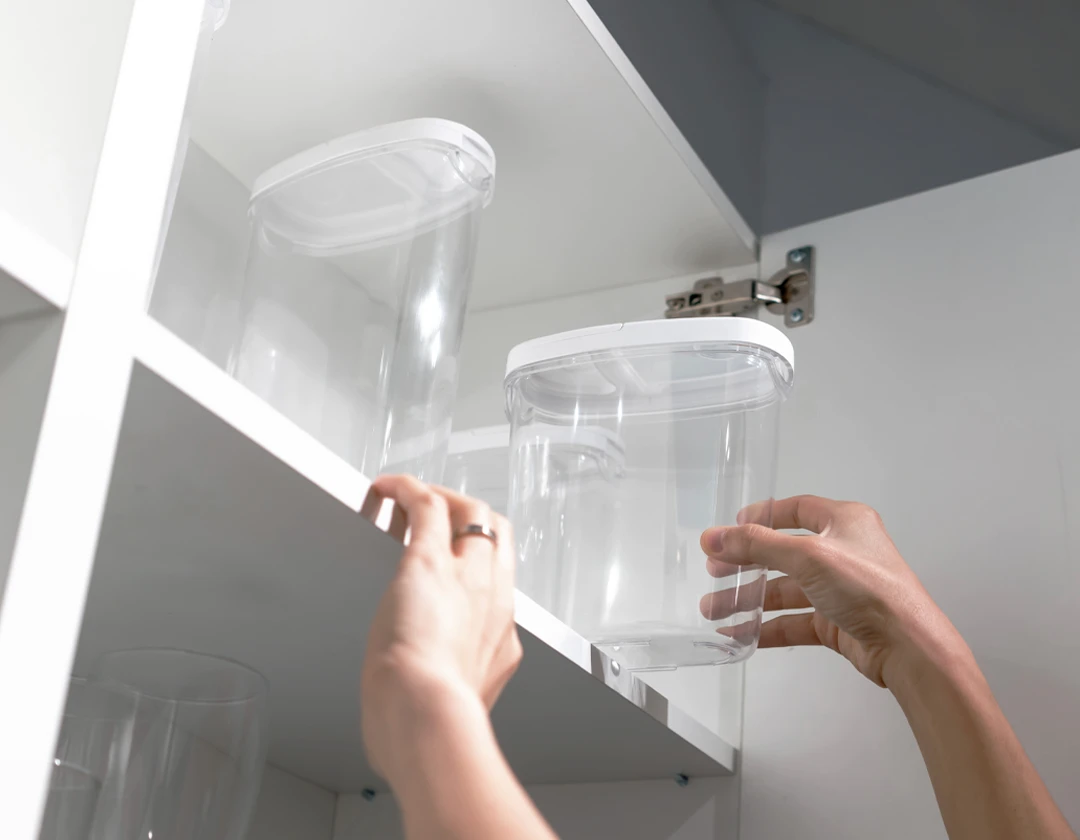
At some point, most homeowners hit the same wall. The house is clean, everything has a place, and it still feels like there's too much stuff and not enough room. The closet is full but nothing is easy to find. The garage holds everything except the car. The kitchen drawer situation is best not discussed.
Here's the thing, most storage problems aren't about having too much. They're about space that's working against you instead of for you. And a lot of that can be fixed without knocking down a wall or spending a fortune.
Look Up
Seriously. Walk through your home and look up.
Most people use wall space from the floor to about shoulder height and treat everything above that like it doesn't exist. That upper zone is some of the most available storage in any home and it almost never gets used.
Shelves above a doorway. Cabinets that run all the way to the ceiling instead of stopping two feet short of it. A wall-mounted shelf above the washer and dryer that holds every laundry supply you own without touching the floor. None of this requires a contractor. Most of it requires a drill, a level, and an afternoon.
The same idea applies under furniture. Bed risers or a storage bed frame can hold an entire off-season wardrobe without going near the closet. Slim bins that slide under a sofa take care of kids' toys, extra blankets, or whatever else needs a home but doesn't need to be visible.
Kitchens
The kitchen is usually where things fall apart first. Counter space gets eaten up fast and cabinets that seemed generous during the walkthrough fill up within a month of moving in.
A few things tend to help more than others. Drawer dividers are the obvious one, most kitchen drawers are just a pile of utensils rattling around in empty space. Add dividers and the same drawer suddenly holds twice as much in a way you can actually find things. Shelf risers inside cabinets do something similar. Most cabinets are set up with shelving spaced for tall items, which wastes a lot of vertical room when most of what you're storing is short. Risers let you stack dishes, canned goods, and containers in layers instead of one deep.
The inside of cabinet doors is worth a look too. Mounted organizers in there can handle spices, foil and wrap boxes, cutting boards, or cleaning supplies, things that eat up shelf space when they're not stored somewhere smarter.
Pots and pans are their own problem. A wall-mounted rack or a pegboard above a prep counter keeps cookware where you can grab it and opens up the cabinet underneath for things that actually need to be behind a door.
Closets
The standard closet setup, one rod, one shelf, works fine for a small wardrobe and not much else. Adding a second rod below the first one for shorter items like jackets, folded pants, and shirts is the single fastest way to increase hanging capacity without touching the closet structure.
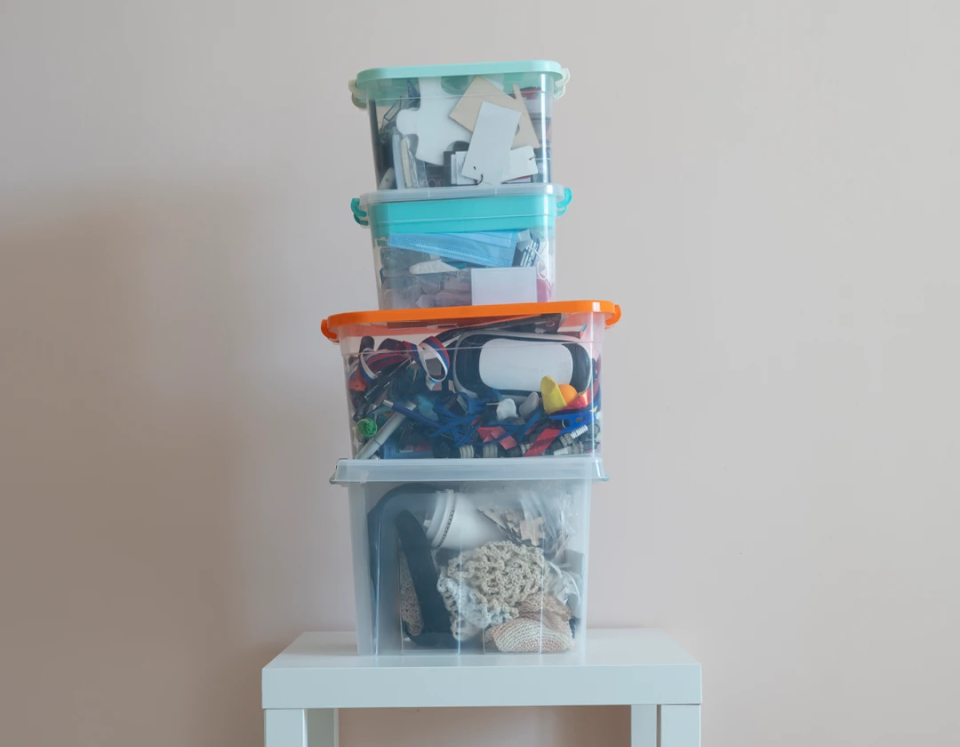
Clear stackable bins are worth the investment. Being able to see what's inside without pulling everything out sounds minor until you're actually using it every day. Seasonal stuff goes on upper shelves in labeled bins, main-use items stay at eye level and within reach, and the whole system stays coherent without having to reorganize it every few months.
Shoes deserve their own mention because they take up floor space in a way that adds up fast. An over-the-door organizer handles a surprising number of pairs and works in bedroom closets, hall closets, and entryways. For a larger collection, a tiered rack along one wall keeps pairs visible without taking over the floor.
The Garage
Garages tend to be the last thing that gets organized and the first thing that becomes a problem. Tools end up on whatever flat surface is available, seasonal gear takes over the corners, and at some point the car stops fitting.
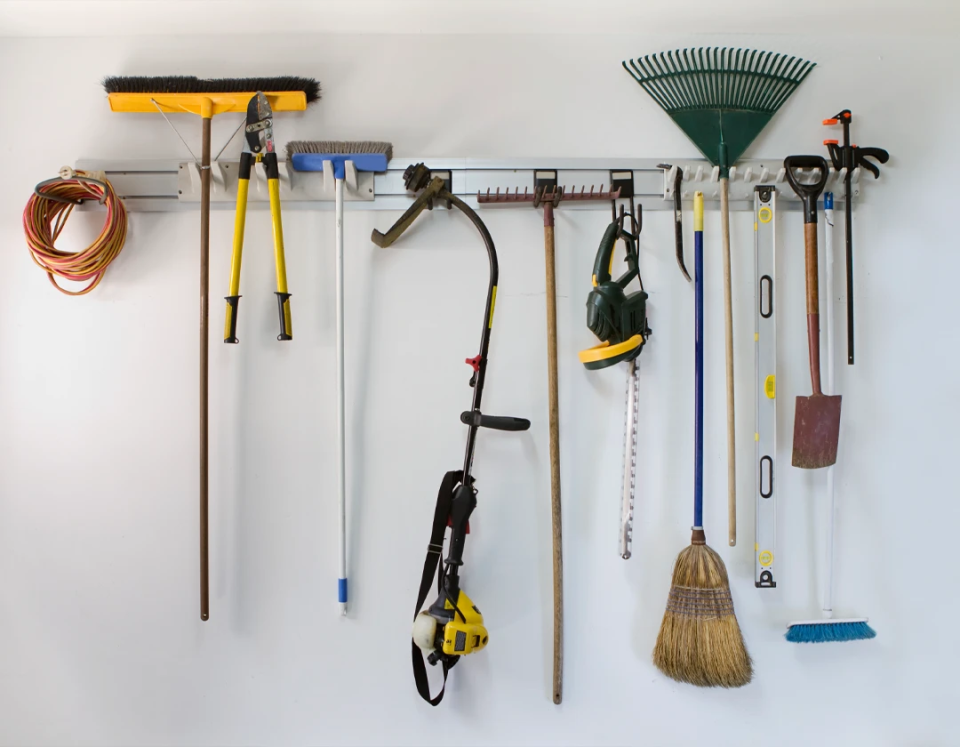
Wall-mounted track systems, the adjustable kind where you move hooks, shelves, and bins around as your needs change, are probably the most practical thing you can put in a garage. Everything comes off the floor, tools stay visible and grouped, and the layout can shift when your storage needs shift. It's not a perfect system, but it beats digging through a pile every time you need something.
Overhead ceiling racks are the right answer for bulky seasonal items. Holiday decorations, camping gear, roof racks that only come down a few times a year, there's no reason that stuff needs to compete for floor and wall space. A ceiling-mounted platform rated for the weight you're putting on it can hold a serious amount without affecting how you use the garage day to day.
Pegboard at the workbench area is still one of the best tools organization options available. Everything is visible, nothing gets buried, and rearranging it takes about thirty seconds.
Bathrooms and Small Spaces
Bathrooms are tight, and most of them don't come with enough storage for the number of people using them. The space above the toilet is one of the most commonly wasted spots in a house, an over-toilet shelf unit drops right into that footprint and adds usable storage without any wall work.
Magnetic strips mounted on the inside of a cabinet door hold small metal items, bobby pins, nail clippers, tweezers, that otherwise scatter across a drawer and never stay put. Tension-mount shower caddies that run floor to ceiling are more stable than hanging versions and hold a lot more without the whole thing tipping over when someone grabs a bottle.
Entryways and tight hallways have their own version of this problem. A bench with storage underneath handles shoes and bags. Hooks above it handle coats and hats. That combination solves most of what an entryway needs to do in about four square feet.
The Part Nobody Wants to Hear
The most organized homes aren't that way because of the right bins and baskets. They're organized because every room has a clear answer to the question: where does this actually go?
Getting there means two things. First, getting rid of what doesn't need a spot because it doesn't need to be kept. Second, giving everything that stays a specific, logical place. Storage products are tools for step two. They don't help with step one.
Pick one room. Get it working. Then move to the next one. Trying to tackle the whole house at once tends to result in a lot of half-finished reorganization and clutter that just moved from one corner to another.
One More Thing Worth Mentioning
A well-organized home is easier to maintain. Accessible shutoffs, clear floor space around appliances, visible signs of moisture or damage, these are things that get missed in a cluttered home and caught in an organized one. Staying on top of your space is part of staying on top of your home.
When something does go wrong with a major system, HVAC, plumbing, electrical, water heater, appliances, an APHW home warranty helps cover the repair. And you choose your own licensed contractor, not whoever the warranty company sends.
Call 800.648.5006 or visit APHW.com to learn more about what's covered.
Terms and conditions apply. Coverage varies by plan. Refer to your service agreement for full details.
