
AC Preparation for Summer: What to Do Before You Actually Need It

AC Preparation for Summer: What to Do Before You Actually Need It
The AC fails in July. Not March. Not October. July, when every HVAC company in your area is booked out a week and a half and you're sleeping with fans pointing at your face.
Most of the time that failure wasn't random. Something was developing for months. A capacitor weakening. Refrigerant a little low. A filter so clogged the system was straining on every cycle. None of it felt urgent in April. All of it felt very urgent in July.
Here's what to actually do before summer shows up.
The Filter
Start here because this is where most people aren't starting.
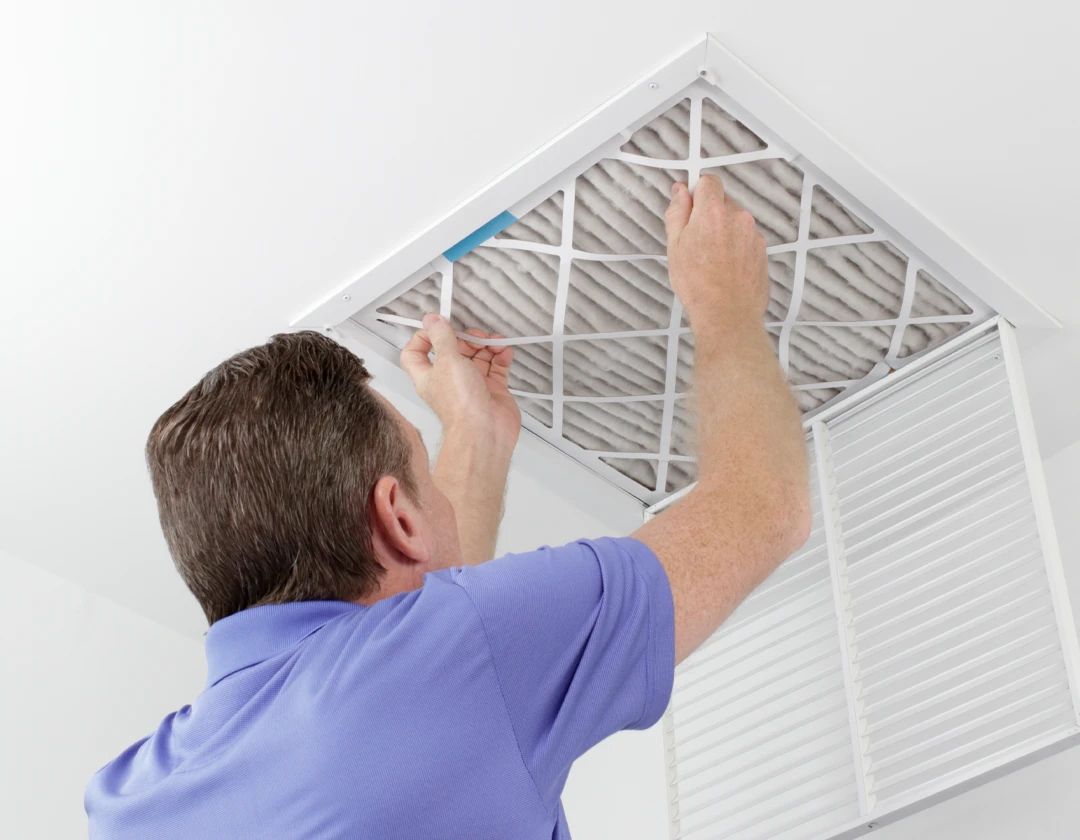
Pull the filter out right now and look at it. If it's gray and packed with dust, your system has been working harder than it should be for however long that filter's been in there. Restricted airflow means the motor works harder, efficiency drops, and the system runs longer to do the same job. That wears things out faster.
Standard filters every one to three months. Pets in the house, someone with allergies, lean toward monthly. This is the cheapest maintenance task on the list and the one that gets skipped most.
The Outdoor Unit
It sat outside all winter collecting everything the weather brought. Leaves packed against the coils. Dirt in the fins. Possibly a bird situation depending on where you live.
Clear at least two feet of space around it. Then take a garden hose, not a pressure washer, pressure washers bend the fins and that's a separate problem, and rinse the coils from the inside out. Let it dry before you run the system.
While you're there, look at the fins. They're the thin metal strips around the outside of the unit. If any are bent flat, pick up a fin comb, about ten dollars at any hardware store, and straighten them. Bent fins block airflow in a way that costs you efficiency all summer long.
Turn It On Before You Need It
Don't wait for the first hot day. Turn it on in May when a failure is inconvenient instead of unbearable. Drop the thermostat below the room temperature and let it run for fifteen or twenty minutes.
Cold air coming out? Good. Consistent airflow across the rooms? Good. Any grinding, rattling, or high-pitched sounds? That's a call to make now, not when it's ninety degrees and every tech in town is already slammed.
If the air runs but doesn't get cold, that's usually refrigerant or a dirty evaporator coil. Not a DIY fix, but catching it in spring means you're getting on someone's schedule in April instead of competing with every other homeowner who waited until June.
The Condensate Drain Line
This one gets ignored until it causes a problem.
The AC pulls humidity out of the air while it cools. That moisture drains out through a PVC line coming off the air handler. Algae builds up in that line over time and eventually blocks it. When it blocks, water backs up into the drain pan, onto the ceiling, onto the floor, wherever gravity takes it, depending on where your air handler sits.
Once a year, pour a cup of white vinegar into the drain line and let it sit for thirty minutes, then flush it with water. That's the whole maintenance task. Takes five minutes. Skipping it for a few years leads to a clogged line at the exact wrong moment.
The Thermostat
Switch it to cooling mode and confirm it's reading the temperature correctly and responding the way it should. If it's a programmable or smart thermostat, check that the schedule is set up for summer; a lot of them get left on whatever the last person set months ago.
A thermostat reading a couple of degrees off seems minor. Over a full summer of the system running longer than it needs to, it shows up on the energy bill.
Get a Professional Tune-Up, Early
Everything above is DIY. This is the one that catches what you can't.
An HVAC tech will check refrigerant levels, inspect electrical connections, clean the evaporator coil, test the capacitors, and measure the system's overall efficiency. If something is developing, and usually something is, they find it before it becomes a failure.
Book in March or April. By June, the wait is real. Getting on the schedule early means you get the tech you actually want, not whoever happens to be available. With APHW, that's always your call; you choose your own licensed contractor, not whoever the warranty company dispatches.
.webp)
Check the Ductwork
Leaky ducts lose 20 to 30 percent of what the system produces before it ever reaches the rooms. The AC is doing its job. The ductwork isn't getting it where it needs to go.
If you have accessible ductwork in the attic, basement, or crawl space, look for sections that have pulled apart at the seams or insulation that's damaged or missing. Foil tape and mastic sealant fix most of it. The efficiency gains are worth the afternoon.
When Something Still Breaks
Good maintenance lowers the odds. Doesn't eliminate them. Capacitors fail. Compressors go. Things wear out on their own schedule regardless of how well you've taken care of them.
APHW home warranty coverage includes your central air conditioning system. When something does fail, you call the contractor you trust, they diagnose the problem, and APHW handles the covered repair directly with them. No dispatch. No stranger at the door. Just a claim, a contractor you chose, and a process that actually works.
Getting coverage before the AC fails is a completely different situation than trying to figure it out after.
Call 800.648.5006 or visit APHW.com..
Terms and conditions apply. Coverage varies by plan. Refer to your service agreement for full details.
