
5 Unexpected Breakdowns New Homeowners Should Be Ready For

Owning a home is one of the great milestones. It also comes with a category of surprises that don't show up in the inspection report. The obvious wear-and-tear items get noticed at closing. The unexpected ones catch people off guard, usually at the worst possible moment.
Here are five breakdowns that surprise a lot of new homeowners in that first year or two, along with what to watch for and how to be ready when it happens.
1. The Sump Pump Quits During a Storm
If your home has a basement or a low crawlspace, there's a good chance it also has a sump pump sitting quietly in a pit in one corner. Most new homeowners never think about theirs until they're standing ankle-deep in water during a heavy rain.
Sump pumps run on a float switch that turns them on when water rises. They can fail for a handful of reasons. The motor burns out. The float gets stuck. The discharge line freezes or clogs. Or the power goes out during the exact storm you need the pump running. Any of those means water starts rising in the pit and eventually spills over into the basement.
What to watch for: a pump that runs constantly, or one that never runs at all. Both are signs that something is wrong.
How to be ready: test yours once a year by pouring a bucket of water into the pit to trigger the float. If it kicks on and pumps the water out, you're good. If not, you know before the next storm.
APHW covers permanently installed sump pumps for groundwater under the standard plan, so a covered failure may come down to a predictable deductible.
2. The Water Heater Springs a Leak
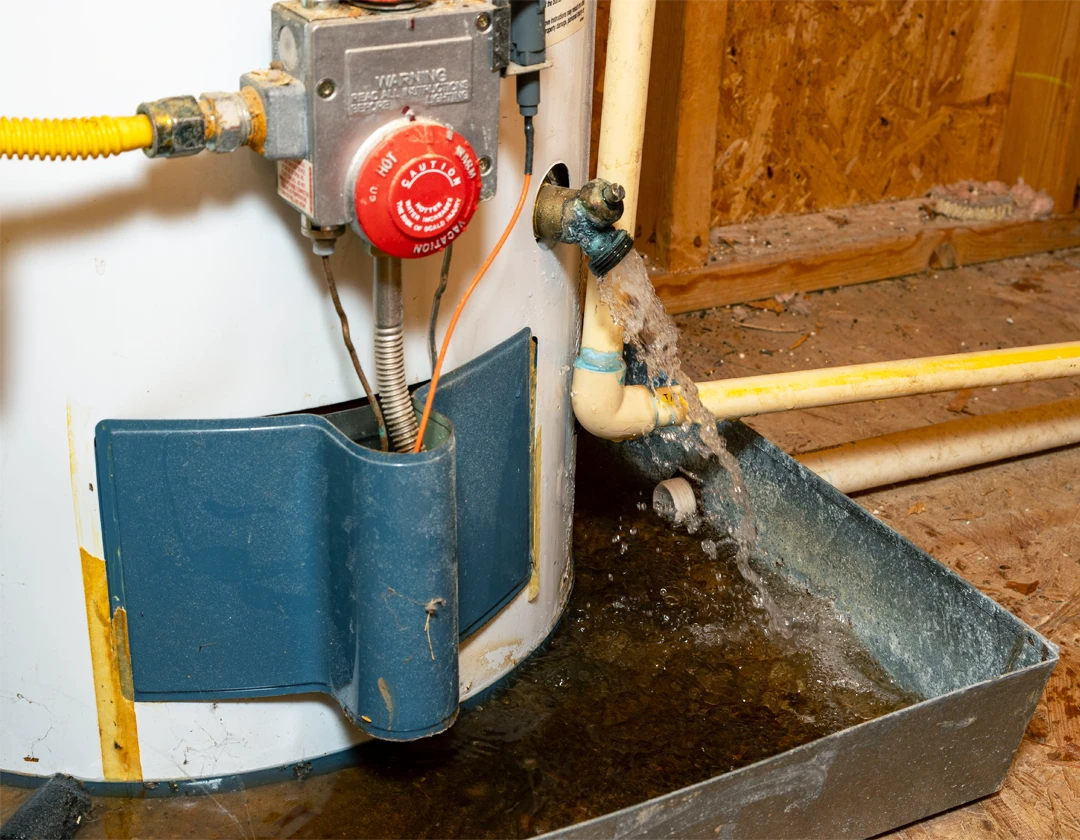
Everyone knows a water heater eventually gives out. What surprises new homeowners is how it gives out. Sometimes it stops making hot water. More often, it starts leaking from a corroded spot on the tank, and the leak grows over days or weeks until there's water spreading across the utility room floor.
By the time most people notice, the tank has to be replaced anyway. But now there's also floor damage, and possibly damage to whatever was stored nearby.
What to watch for: rust-colored water at the tap, popping or rumbling sounds from the tank, a puddle at the base of the unit, or a unit that's more than ten years old.
How to be ready: know where your water heater lives and check it every couple of months. Look for corrosion around the fittings and any moisture at the base. Flushing the tank once a year removes sediment that shortens the life of the heating element.
APHW's standard plan covers repair or replacement of the working components of a water heater, so an unexpected failure doesn't have to mean an unexpected bill.
3. The AC Dies on the Hottest Day of Summer
This one has a signature moment. It's 95 degrees, everyone's sweating, and the AC is running but nothing cold is coming out. Or the unit is completely silent when it should be humming.
New homeowners often assume the whole system has died and start pricing out replacements. In many cases, it's a much smaller part. A capacitor, a contactor, a blower motor, or a burned-out fan motor on the outdoor unit. These components fail regularly, and the repair is far less involved than a full system replacement.
What to watch for: an outdoor unit that starts and immediately stops, warm air blowing from the vents, humming without airflow, or any burning smell near the equipment.
How to be ready: change the HVAC filter on the schedule the manufacturer recommends, and clear leaves and debris from around the outdoor unit at least twice a year. Both habits add real time to the life of the equipment.
APHW covers central air conditioning under the standard plan, so when the small parts fail, the covered repair may go through your plan instead of being paid entirely out of pocket.
4. The Refrigerator Stops Getting Cold
You open the door in the morning and something's off. Milk is warm. This one hits the hardest because there's a stopwatch on it. Every hour that passes puts more food at risk, and the repair conversation has to happen fast.
Many refrigerator failures come down to the compressor, which is the most expensive single part in the unit. A compressor replacement can run $500 to $1,500 or more. On a mid-range fridge, that's a meaningful chunk of the cost of replacing the whole appliance.
What to watch for: a fridge that runs constantly, one that never seems to reach temperature, or one that goes suddenly quiet when it should be humming.
How to be ready: vacuum the condenser coils twice a year. Dust buildup on the coils forces the compressor to work harder and takes years off the appliance's life. It's a five-minute job with a coil brush and a shop vac.
APHW's standard kitchen refrigerator coverage includes the compressor. On real estate plans with the Buyer Preferred Upgrade, coverage extends to include the control board, ice maker, and dispenser.
5. A Pipe Buried in the Yard Fails
Here's the one nobody expects. The pipe running from your water meter to your home, or from your home to the sewer main, is your responsibility as the homeowner. Most people don't learn this until there's a wet spot forming in the yard, a sewage smell coming from a drain, or an unexpected message from the utility company about water usage.
These lines can fail from tree root intrusion, ground shifting, freezing in an unusually cold winter, or simply age. Diagnosis alone can be expensive because it usually involves camera work down the line. The repair often involves digging.
What to watch for: unexplained wet spots or unusually lush grass in a specific pattern, slow drains across multiple fixtures in the house, sewage odors near a drain or in the yard, or a water bill that jumps for no reason.
How to be ready: know roughly where your water line and sewer line run across the property. If you have mature trees near either line, keep an eye out for root intrusion signs.
APHW's standard plan includes coverage for exterior water and sewer lines between your foundation and the main only. That means the pipe on your property, which most homeowners insurance policies won't touch, may be covered under the plan; make sure to read the Terms and Conditions (download the document for full details) to review what is and is not covered.
Preparing for What You Can't Predict
Some surprises can't be prevented. That's the reality of home ownership. What you can do is know what tends to happen, be honest with yourself about what's already aging in your home and have a plan for how you'll handle the repair when the moment arrives.
A home warranty is one way to make that plan predictable. When a covered item fails, homeowners pay the deductible, and the home warranty is there to help manage the rest, so the surprise stops feeling like a crisis.
How APHW Fits
APHW covers major systems and appliances like HVAC, plumbing, electrical, water heaters, kitchen appliances, and more, subject to the plan's terms and exclusions. When a covered item fails, you get to choose the licensed contractor you trust to handle the repair. Someone whose work you already know, showing up on a schedule that fits yours.
Ready to Get Covered?
If you're a new homeowner and want to know what a plan would cover for your specific home, we're happy to walk you through it.
Call 800.648.5006, visit aphw.com, or reach out to your APHW Area Sales Manager.
